How Adam Took His Lab From Pen and Paper to a Fully Automated Operation

The Challenge
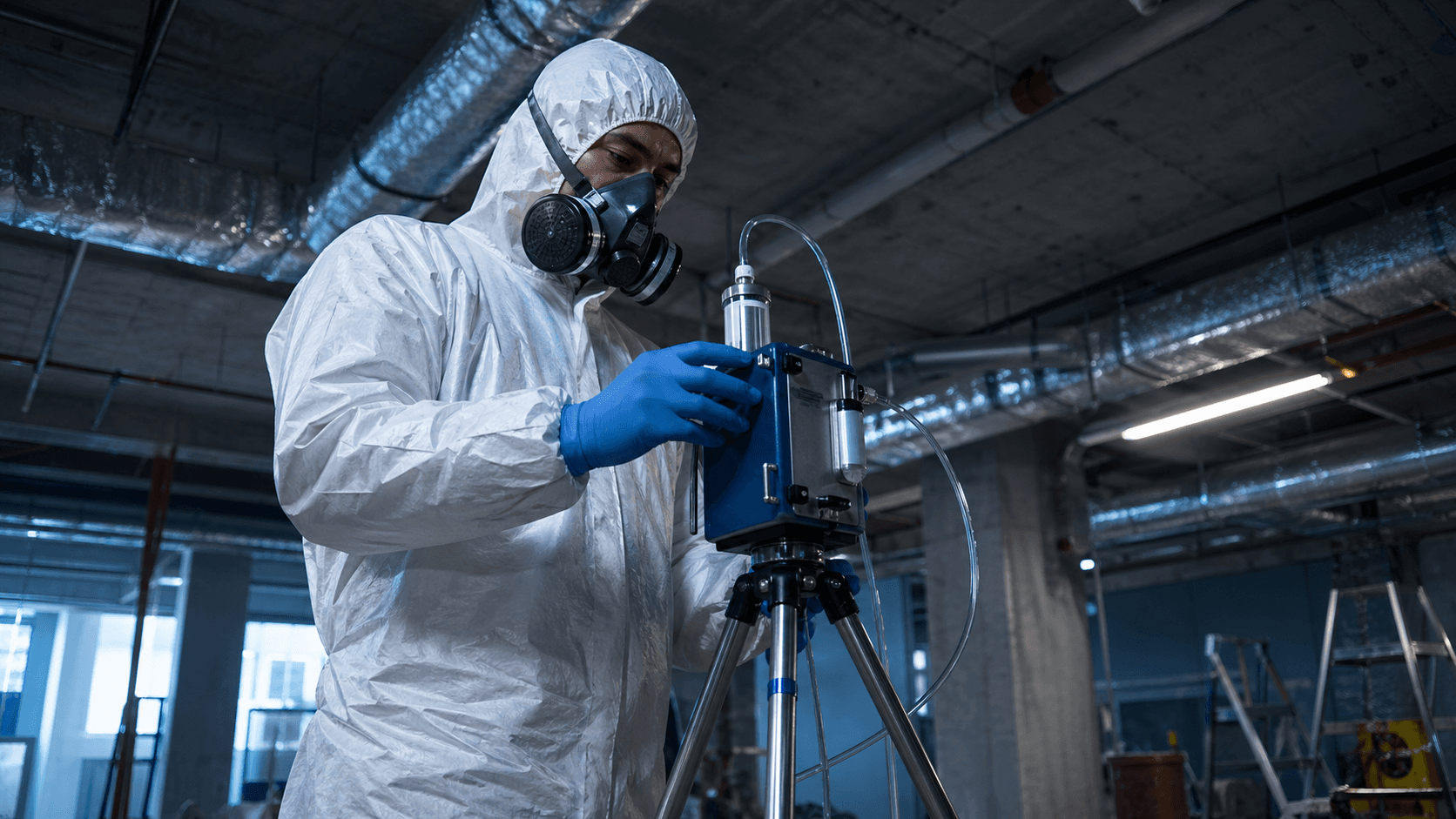
AdamLabs is an environmental testing laboratory. They analyze mold, asbestos, and lead samples for contractors, property managers, and remediation companies, and the reports they produce are the documents their clients rely on to make decisions about a building.
When Adam came to J9 Systems, all of that ran on paper.
Field technicians filled out chain of custody forms by hand and drove them back to the lab. The office retyped every one of them. Scheduling lived on a wall calendar and in phone calls. Analysts recorded results on paper worksheets, and the back office typed those results into Word templates one line at a time, doing the math for cover letters by hand with a calculator.
Invoicing was a separate manual pass at the end. Someone had to remember which jobs had been reported, look up what to charge, and build the invoice from scratch. Clients who wanted their card run just got run, whenever someone got to it.
The problems compounded. A number transposed on a paper worksheet made it into a report. A job got scheduled twice because two people were looking at two versions of the calendar. A client called asking where their results were, and answering meant walking to a filing cabinet.
Adam described the reality plainly. The lab was good at science and buried in paperwork.
And because he was the one who knew the methods best, every report ended up on his desk for review. The lab director spent his week proofreading paperwork instead of running a laboratory.
The Solution
We built AdamLabs a single operating system that follows the exact path a job takes through the lab: intake, scheduling, sample collection, analysis, reporting, and billing. Nothing is retyped between those steps because nothing ever leaves the system.
Here is what we delivered:
- Digital Work Order Intake: Every job starts as a work order with the client, site address, service type, and scope captured once. The system assigns the lab number automatically using the lab's own numbering convention, so the identifier is right every time instead of being written by hand.
- Operations Snapshot Dashboard: One screen shows the whole lab at a glance, broken out by what each job needs next: scheduling, sample collection, analysis, reporting, or billing. Nothing sits in a pile waiting for someone to notice it.
- Drag-and-Drop Scheduler: Field work is scheduled on a shared calendar with a per-technician view and availability built in. Techs see their day on their phone with the site details attached. Double bookings and missed visits stopped being a category of problem.
- Digital Sample Collection: Technicians record air, surface, tape lift, and bulk samples in the field on structured forms tied to the work order. Chain of custody is captured at the point of collection rather than reconstructed later from handwriting.
- Analysis Workflow: Analysts pick up samples in the system, and the analyst and method are recorded against each one. Every sample on a job is visible in a single view, so nothing gets analyzed twice or missed entirely.
- Automated Report Generation: Results flow straight from the analysis screen into the lab's report templates for mold air, mold surface, asbestos, and lead. Cover letter calculations, hazard rollups, and comparisons run automatically off the recorded data instead of being worked out by hand.
- In-App Template Control: The lab builds and edits its own report templates inside the system, including disclaimers and standard language. Changing the wording on a report no longer requires a developer.
- Integrated Invoicing: Each work order carries its own invoice. The office reviews it before it goes out, then sends it with one click through the payment integration. Clients with a card on file are charged automatically and get a receipt without anyone touching it.
- Client Records and Contacts: Multiple billing and reporting contacts are stored per client, so invoices and reports reach the right people every time without re-entering addresses.
- Reporting Dashboards: Adam and the office can see job volume, turnaround, and income without exporting anything or asking anyone.
- Built-In Ticketing: Staff submit bug reports and feature requests from inside the app. Those become tracked work on our side, which is how the system has kept improving instead of freezing on launch day.
The Results
The paperwork layer of the business went away.
- 20+ office hours saved every week
- No retyping between the field, the bench, and the report
- Fewer transcription errors, because results are entered once at the source
- Faster turnaround from sample collection to report delivered
- Invoices sent the same day the work is reported, not at the end of a chasing cycle
- Instant answers for clients calling about a job status or a past result
The accuracy gain is the one Adam cares about most. When a number is recorded once, at the bench, and every downstream document is built from that record, the whole class of copy-and-paste mistakes disappears. Calculations that used to be done by hand on a cover letter are now derived from the data itself.
Customer service changed just as much. The office can answer a status question in seconds, reports go out the moment they are approved, and clients get consistent, professional documents every time.

Adam Jahnsen, director of AdamLabs. Before the rebuild, most of his week went into reviewing paperwork. Now it goes into the lab.
Giving the Lab Director His Job Back
The biggest change was not measured in hours saved in the office. It was what happened to Adam's week.
He had become the bottleneck by default. Every report passed through him because he was the last line of defense against a bad number, and reviewing them by hand was the only way to catch anything.
With results captured once and reports generated from that record, the review step got dramatically shorter. Adam stopped being the human error check on a paper process and went back to being the lab director: developing methods, training analysts, handling the technical work that actually needs his expertise, and taking on the client relationships that grow the business.
In his words:
"We've gone from paper chaos and siloed systems to seamless digital workflows. It's saved us countless hours and completely transformed how we run our business."
The Takeaway
Labs live and die on accuracy and turnaround, and paper works against both.
AdamLabs did not need a bigger office or more admin staff. They needed the work to stop being retyped four times on its way from a sample bag to an invoice. One system built around how the lab actually operates gave the office its week back, made the reports more reliable, and freed the person whose expertise the business depends on to go use it.
Every sample, result, and report now lives in one structured database instead of a filing cabinet. That is the foundation AI needs to flag a result that falls outside the expected range before a report goes out, draft the plain-language summary a homeowner can actually read, and answer a client's question about a past job without anyone pulling a file.
This is the next step available on this build, not work delivered in the project above. A system like this one is what AI needs underneath it before it can do anything useful. See how AI gets built in →